

Our Story
From generation to generation, the women of the same family have successively invented a new way of dressing, defining its rules and adapting them to the eras, while always maintaining the same distinctive touch that is the House’s reputation. A must-visit destination in Paris for two centuries, women from all over the world, the most refined and famous, continue to meet in our salons.

1889
THE INVENTION OF THE BRA
Herminie Cadolle, after participating with Louise Michel in the revolutionary events of the Paris Commune, emigrated with her whole family to Argentina. There, she founded the first "Cadolle house" and quickly made a fortune before returning to France to found another establishment on rue de la Chaussée d'Antin. It was during the 1889 World's Fair (the one for which the Eiffel Tower was built) that Herminie Cadolle exhibited her new invention: she had just had a simply brilliant idea: for women's comfort, she had cut the traditional women's corset in half: she had just invented the first bra, for which she filed a patent and which she called the "corselet-gorge". The extraordinary life of this revolutionary woman across the world is recounted in a book on the Cadolle Saga.

1911
rue Cambon
At that time, Marie Cadolle decided to leave her premises on Rue de la Chaussée d’Antin and the Parisian department store district to set up shop on Rue Cambon; other fashion designers, who would later become famous, joined this movement and created a new Parisian fashion and elegance hub at this address. Today, Maison Cadolle still stands as an institution there.

1921
SUZANNE LENGLEN
Marguerite Cadolle is good friends with a famous tennis player of the time: Suzanne Lenglen. Together, they signed several advertising campaigns for Cadolle's perfume line. Always innovative, Maison Cadolle thus launched the first co-branding with a woman from the world of sport.

1945
THE BOYISH FORM, FOR COCO CHANEL
That year, Marguerite created the first flattening bra: the famous boyish form. Then, for the Duchess of Windsor and many other famous women of that tumultuous era in Europe, she created refined lingerie collections: plunging necklines, extremely fitted dresses... Through her prolific creations, she forged the first link between corsetry and haute couture: the "Cadolle touch" was born.

1947
THE WASPIE, FOR MARCEL ROCHAS
Alice Cadolle developed a new waist cincher with Monsieur Rochas and named it after the couturier. Inspired by the slender waist of a wasp, a new female body silhouette was created with the "waspie." This was a far cry from the ribbon, twill, and metal bras Herminie made for the famous spy Mata Hari.

1949
THE NEIMAN MARCUS AWARD
Numerous awards would crown Maison Cadolle's abundant creations during the post-war period. In 1949, two years after Monsieur Christian DIOR, Alice Cadolle received the most prestigious global fashion award of the era: the Neiman Marcus Award in the United States.

1989
THE RETURN OF THE CORSET
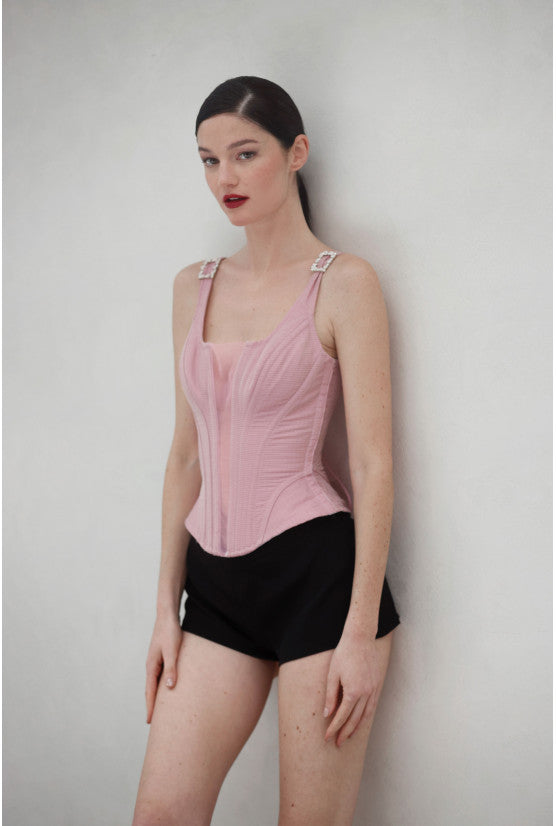
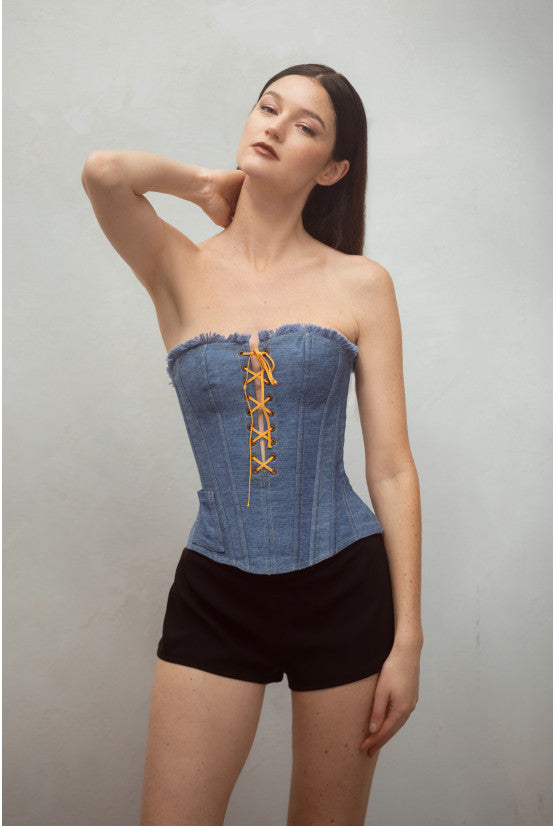
At a trade fair in Paris, Poupie Cadolle launched a new type of corset. The use of new modern materials combined with a new definition of the female silhouette transformed the old corset into a truly comfortable garment rather than a restrictive one. Women immediately fell in love with this new garment, which they had forgotten for 80 years. Almost immediately, the corset made its return to Parisian Haute Couture collections and found its way into the wardrobes of stars and fashionistas. The corset broke free from its original image and reinvented itself as a glamorous piece, symbolizing the refinement it had always represented.

the 2010s
THE CADOLLE TOUCH
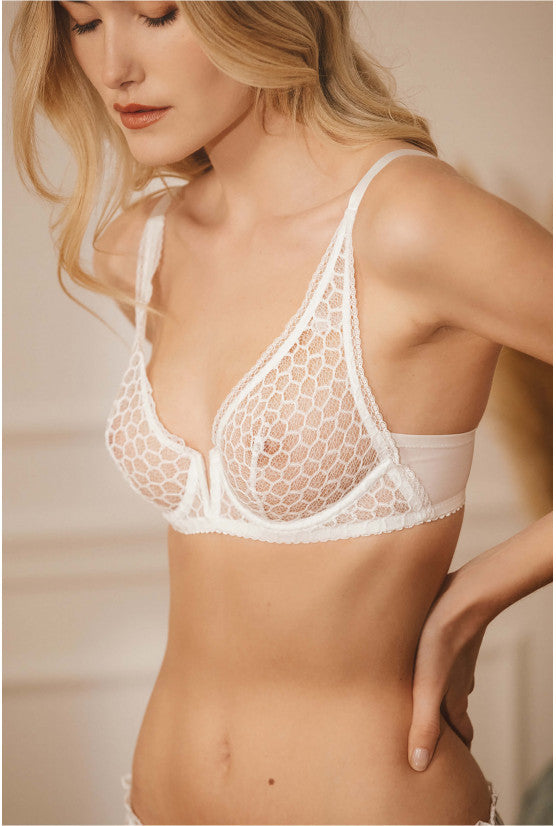
Alongside the iconic lines, always meticulously followed and updated, new lines more focused on seduction are now being added. Expressing and affirming a woman in tune with the spirit of her time, the Geisha line marks a turning point in the often discreet and elitist history of the House: it reveals a seductive woman who fully embraces her sensuality, bearing the hallmark of the famous "Cadolle touch."